
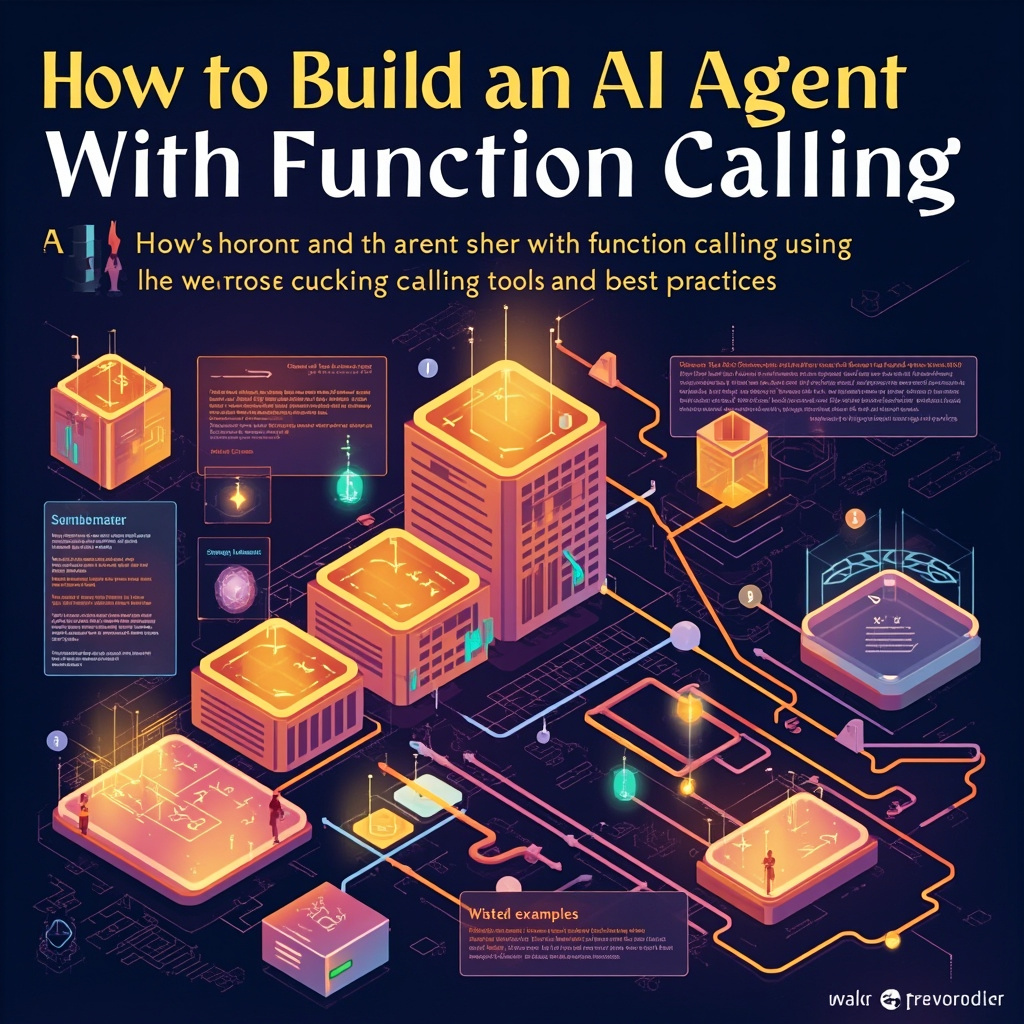
Function Calling is now one of the most powerful features available to developers working with Large Language Models. In 2026, this technology has reached a level of maturity that enables the creation of AI agents capable of interacting with external tools, APIs, and legacy systems in a reliable and scalable way. In this guide, we'll walk you step by step through building an AI agent based on Function Calling, from theoretical aspects to practical implementation.
What is Function Calling and Why It Matters
Function Calling (or tool use) enables a language model to generate calls to developer-defined functions instead of simply producing text. When a user asks a question, the model analyzes the context and decides whether it is necessary to invoke one or more functions to provide a complete answer. This approach transforms an LLM from a simple chatbot into a true autonomous agent capable of taking actions in the real world.
In 2026, major AI platforms offer native support for Function Calling: OpenAI, Anthropic, Google Gemini, and many open-source providers such as Mistral and Meta. The difference from previous years lies in the reliability of calls, the ability to handle complex functions with multiple parameters, and the possibility of chaining — that is, concatenating multiple function calls in a single session.
Designing Your AI Agent's Tools
The design phase is crucial for the success of your agent. You need to identify which external functionalities your agent should expose to the LLM. Each function must have a clear and precise description, because it is exactly that description that the model will use to decide when to invoke it. It is good practice to write detailed descriptions that include the purpose of the function, the expected parameters, and the return types.
Here are some key principles for designing your agent's tools:
- Choose descriptive names for functions that clearly reflect their responsibilities
- Define well-structured parameter schemas with type validation
- Provide rich descriptions for each function and for every parameter
- Limit the number of functions to only those truly necessary to avoid confusing the model
- Anticipate error-handling mechanisms for every call
In 2026, frameworks like LangChain, LlamaIndex, and the native SDKs of major providers offer powerful tools for declaring and managing functions. Many of these frameworks also support automatic JSON schema inference from Python definitions, significantly reducing the boilerplate code required.
Practical Implementation: From Code to Production
Implementing an AI agent with Function Calling follows a well-defined flow. Let's start with a practical example using Python and a modern model provider. The first step is to define the functions the agent can use, then register them with the LLM provider, and finally manage the conversation loop that alternates between model calls and function execution.
An effective pattern in 2026 involves using a main loop that manages three phases: sending the request to the LLM with the available tools, analyzing the response to identify any function calls, and executing the functions with the results returned to the model. This loop can repeat multiple times until the agent produces a final textual response. Some modern frameworks also support parallel calling, i.e., the simultaneous execution of multiple functions when the model requests it.
For production, it is essential to implement security mechanisms such as whitelisting of accessible functions, timeout management, and full logging of every call. In 2026, many developers adopt microservices architectures where the AI agent communicates with functions exposed as REST or gRPC APIs, ensuring independent isolation and scalability.
Best Practices and Optimizations for 2026
The AI developer community has identified numerous best practices to maximize the effectiveness of Function Calling-based agents. One of the most important concerns the quality of function descriptions: a model well-instructed on tool capabilities produces much more accurate calls. Other recommendations include using well-calibrated system prompts, elegantly handling runtime errors, and implementing caches for expensive function calls.
An increasingly relevant aspect in 2026 is the performance evaluation of agents. Tools like LangSmith, Phoenix, and the native dashboards of providers allow you to monitor metrics such as call success rate, average latency, and response accuracy. These data are essential for iterating and continuously improving your agent.
Finally, consider leveraging the advanced features offered by the latest models, such as structured output, which ensures that model responses follow exactly the expected JSON schema, reducing parsing errors and increasing the overall reliability of your AI agent.
Practical Takeaway
To get started right away, choose an LLM provider with solid Function Calling support, define 3 to 5 well-described functions for a concrete use case, and build a minimal prototype with a single request-response cycle. The key to success lies in the quality of function descriptions and the robustness of error handling: these two elements will make the difference between an agent that works in the lab and one that is production-ready.
Ti serve una soluzione AI su misura?
EasyTaskFlow sviluppa soluzioni AI personalizzate, hosting dedicato, app mobile e integrazioni API. Raccontaci il tuo progetto.
Contattaci ServizioSiti