
Function Calling represents one of the most significant evolutions in the interaction between language models and software systems. Building an AI agent that knows when and how to invoke external functions means opening the door to truly autonomous solutions, capable of interacting with APIs, databases, and real-world tools. In this guide we will explore the process step by step, with a focus on the best practices of 2026.
1. Fundamentals of Function Calling
Function Calling allows an LLM to generate calls to developer-defined functions instead of simply producing text. When the model detects that a request requires an external action, it structures a response in JSON format that includes the function name and parameters. This mechanism transforms the model from a simple chatbot into a true orchestrator of operations.
To leverage it effectively, it is essential to define a clear contract between the model and the application layer. Functions must be described with explicit names, typed parameters, and descriptions that the model can fully understand. The quality of the descriptions directly influences the accuracy of the generated calls.
In 2026, major providers have significantly refined Function Calling stability, drastically reducing hallucination cases and improving the handling of complex schemas. Tools such as OpenAI Functions, Anthropic Tool Use, and the open specifications of various frameworks provide similar experiences, simplifying the technology choice.
2. Designing Tools for the Agent
The tool design phase is crucial for project success. Before writing code, map out all the actions your agent will need to perform. Break down functionalities into atomic and coherent tools: each function should have a single, well-defined purpose, with minimal and self-explanatory parameters.
Here are some guiding principles for design:
- Use clear, verb-based function names (e.g.,
get_weather,create_ticket) - Document every parameter with descriptions meant for the model, not just for humans
- Handle errors at the application level; do not rely on the model to implicitly retry
- Limit the number of available tools to avoid confusion and improve performance
A common mistake is overloading the agent with too many tools. Less is more: a small set of well-described functions produces significantly better results than an abundant but poorly documented catalog.
3. Practical Implementation
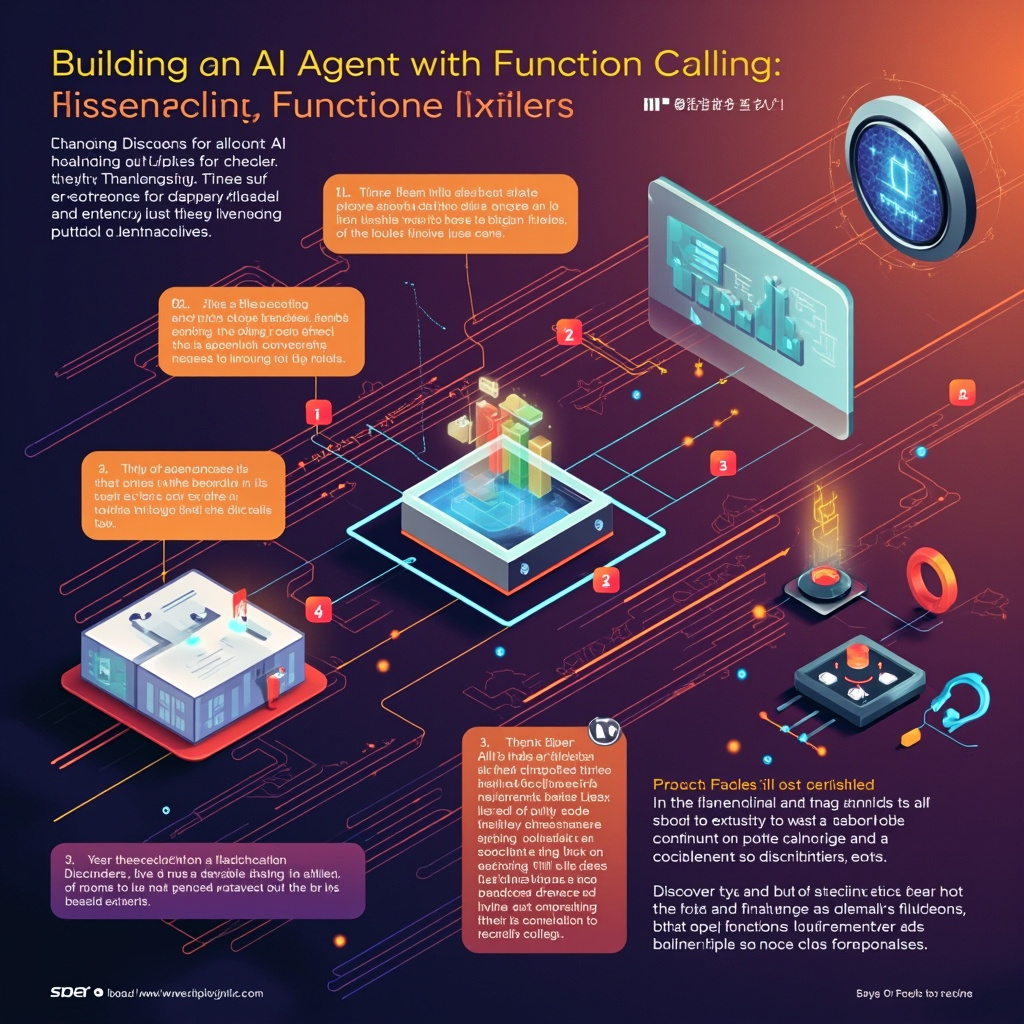
Building the agent requires a precise interaction cycle: send the user message to the model with the tool definitions, execute the function returned by the agent, and pass the result back to the model for final response generation. This pattern repeats every time the model decides to invoke a tool.
Below is a conceptual example of the main architecture:
- Initialize the LLM client with the list of available tools
- Send the user prompt along with the function definitions
- Detect function calls in the model's response
- Execute the functions with the extracted parameters
- Insert the results into the conversation history and relaunch the model
- Return the final text response to the user
Frameworks like LangChain, LlamaIndex, and native SDKs greatly simplify this workflow. In 2026 the trend is toward lighter abstractions that give direct control over the execution cycle, enabling advanced customizations without the overhead of monolithic libraries.
4. Best Practices and Optimizations for 2026
With industry evolution, certain practices have become consolidated as industrial standards. State management becomes essential when the agent must maintain context across long sessions with multiple function calls. Implement a tracing system that records every tool call and its corresponding result.
Add robust security layers: always validate incoming parameters from the model before executing any function, especially those that modify data. Use permission scoping to limit the actions the agent can perform, and consider implementing a Human-in-the-Loop for critical operations.
Finally, monitor Function Calling performance in production. Track metrics such as call success rate, average latency, and error patterns. This data will allow you to continuously refine tool descriptions and the overall quality of the agent over time.
Conclusion
Building an AI agent with Function Calling is more accessible than ever, but success depends on the care put into tool design and execution cycle management. Start with a small set of well-defined functions, build a solid architecture for the tool-call/result flow, and constantly monitor results. The practical takeaway? Start small: create an agent with 2-3 functions, validate its behavior, and scale progressively. The quality of tool descriptions makes the difference between a useful agent and a frustrating one.
Ti serve una soluzione AI su misura?
EasyTaskFlow sviluppa soluzioni AI personalizzate, hosting dedicato, app mobile e integrazioni API. Raccontaci il tuo progetto.
Contattaci ServizioSiti