
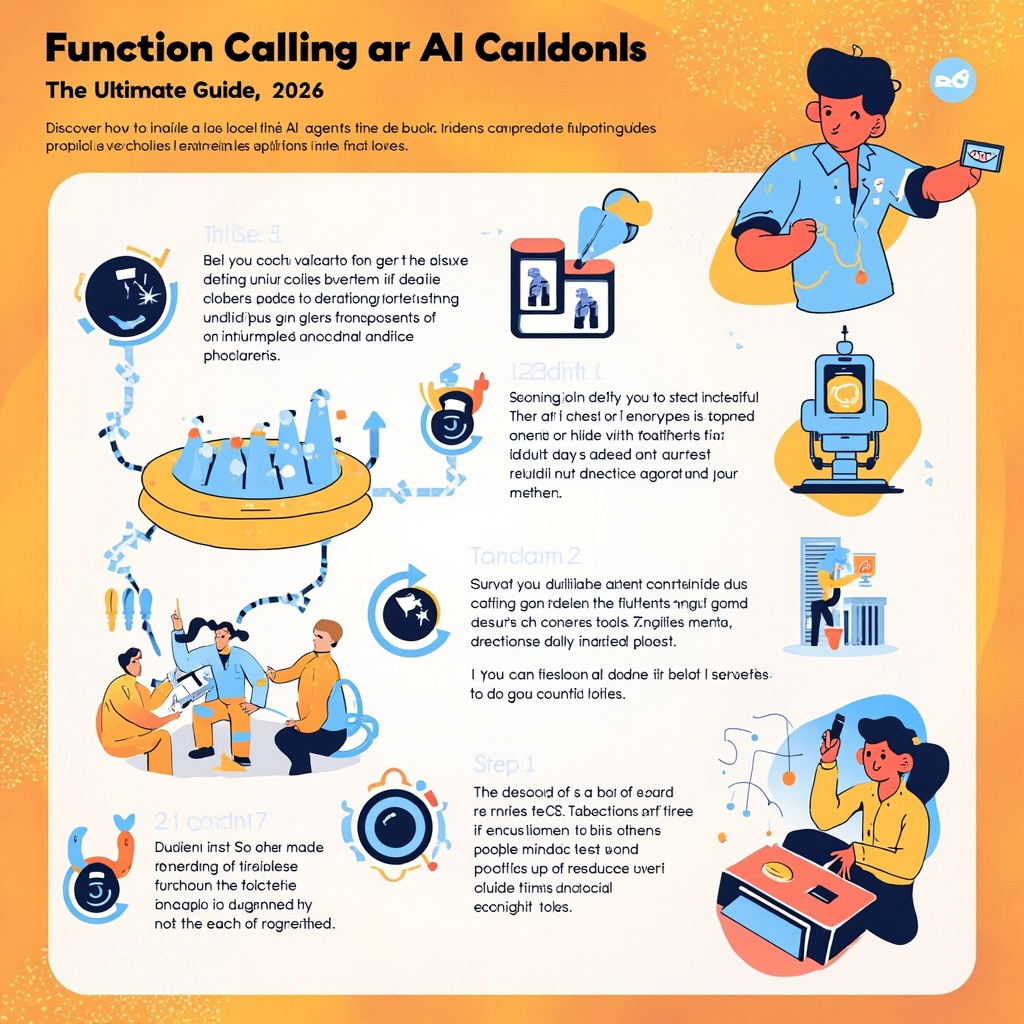
2026 marks an epochal turning point in AI agent development. Function calling—the ability of language models to execute external functions in a structured way—has become the cornerstone for building intelligent applications that interact with the real world. In this article, we will guide you through every phase of creating a function calling-powered AI agent, from conceptual foundations to practical implementation.
Why Function Calling Is Fundamental in 2026
Modern agentic architectures no longer limit themselves to generating text: they must act. Function calling allows LLMs to understand when to invoke an external tool, which parameters to pass, and how to interpret the result. This capability transforms a passive model into an autonomous agent capable of taking concrete actions.
In the 2026 landscape, the main SDKs (OpenAI, Anthropic, Google) offer unprecedented interoperability. Agents can orchestrate multiple calls, handle errors, and refine responses based on the results of executed functions. This closed loop is what separates a chatbot from a truly productive agent.
The standardization of JSON payloads and the advent of frameworks like LangGraph and CrewAI have democratized development, enabling even small teams to create complex workflows with just a few dozen lines of code.
Designing the Function Schema
The heart of every function calling-based agent is the schema of available functions. In 2026, the best practice requires treating tools as true APIs: with clear descriptions, typed parameters, and pre-validation. A well-designed schema drastically reduces hallucinations and improves agent reliability.
When defining your functions, follow these principles: descriptive and verbose naming, JSON Schema-compliant schema, detailed description that explains when the agent should invoke it, and parameters with clear constraints (enum, pattern, range). The richer the semantic context, the better the model's decision routing.
- Use snake_case function names as the de facto standard
- Include usage examples in the description when possible
- Validate parameters on the agent side before execution
- Document possible errors and edge cases in the metadata
Practical Implementation: Step-by-Step
To build your first agent in 2026, let's start with a modular approach. Suppose we want to create an assistant agent for appointment management that can consult a database, create new appointments, and send confirmations via email. Each capability becomes a function registered in the agent.
The architecture follows a cycle pattern: the user sends a message, the agent decides whether to call a function or respond directly, the function result is injected into the context, and the model generates the final response. Frameworks like LlamaIndex and the native tools of LangChain simplify this flow enormously with just a few steps.
A crucial aspect of 2026 is multi-turn tool use: agents can call functions in sequence, passing results between them without human intervention. This enables workflows like "search product → compare prices → create order → send confirmation" in a single conversational turn.
Error Handling and Best Practices for Production
Building a working agent locally is different from bringing it to production. In 2026, the most experienced teams adopt a defensive approach: circuit breakers for functions that fail repeatedly, configurable timeouts, retry with exponential backoff, and fallback to text responses when tools are unavailable.
Monitoring call traces is essential. Tools like LangSmith, Phoenix, and OpenLIT offer complete visibility into every decision path of the agent, allowing you to identify error patterns, poorly designed functions, or missing parameters. Structured logs with tracing IDs facilitate debugging in distributed contexts.
Finally, do not underestimate the importance of system prompts and few-shot examples within the function descriptions. Even with cutting-edge 2026 models, a well-calibrated context makes the difference between a reliable agent and one that systematically ignores certain tools.
Practical Takeaway
To get started today: take a model that supports function calling, define 3-5 essential functions for your use case, implement the basic ask-decide-act-reply cycle, and iterate by improving descriptions. The quality of the function schema directly determines the quality of the agent—invest time in design before adding complexity.
Ti serve una soluzione AI su misura?
EasyTaskFlow sviluppa soluzioni AI personalizzate, hosting dedicato, app mobile e integrazioni API. Raccontaci il tuo progetto.
Contattaci ServizioSiti